
Should You Smile in a Headshot? How to Choose an Expression That Fits

You do not have to choose between looking friendly and looking professional. A headshot can do both—and you do not need a huge grin to get there.
I’m Austen Hunter of Austen Hunter Photography. I photograph corporate teams and professionals in Pensacola, and my advice is to start with where the picture will appear, then find an expression you can wear comfortably.
Key Takeaways
|
Start With the Job the Photograph Needs to Do
A company directory, a speaker announcement, and a large advertising portrait do not all need the same treatment. For a team page, I would usually start with an approachable expression and consistent framing. For an individual portrait, there may be more room for a quiet, thoughtful look.
A job title does not settle this. Attorneys can smile. Executives can look warm. A neutral expression does not prove competence, and a smiling photograph does not promise a business result. The useful question is: does this look like someone your clients will recognize when they meet you?

A composed, neutral expression is one option. It does not need a scowl or a tense jaw.
Three Expressions Worth Trying
Expression | A Useful Starting Point |
|---|---|
Natural smile | When you want an open, conversational feeling. Let the smile reset rather than holding it continuously. |
Small closed-mouth smile | When you prefer a quieter expression or do not feel comfortable showing teeth. |
Relaxed neutral expression | When a more reserved portrait fits the use. Keep the jaw and shoulders comfortable. |

A smiling headshot can still look polished and professional. Neither expression needs to become a rule for an entire industry.
“Your expression should make you recognizable, not make you perform a version of yourself you would never bring to a conversation.” — Austen Hunter
How to Avoid a Forced Smile
Take a breath and let your face relax between photographs. A smile held for too long can become work; a brief reset gives you a fresh starting point.
Instead of concentrating on every facial muscle, think of greeting a person you are pleased to see. Try a smaller smile first. If talking or a little laughter helps, use that moment rather than trying to freeze a laugh indefinitely.
You can tell your photographer when an expression feels uncomfortable. That is useful feedback, not a failure at being photographed. My headshot preparation guide covers the other decisions you can settle before arriving.
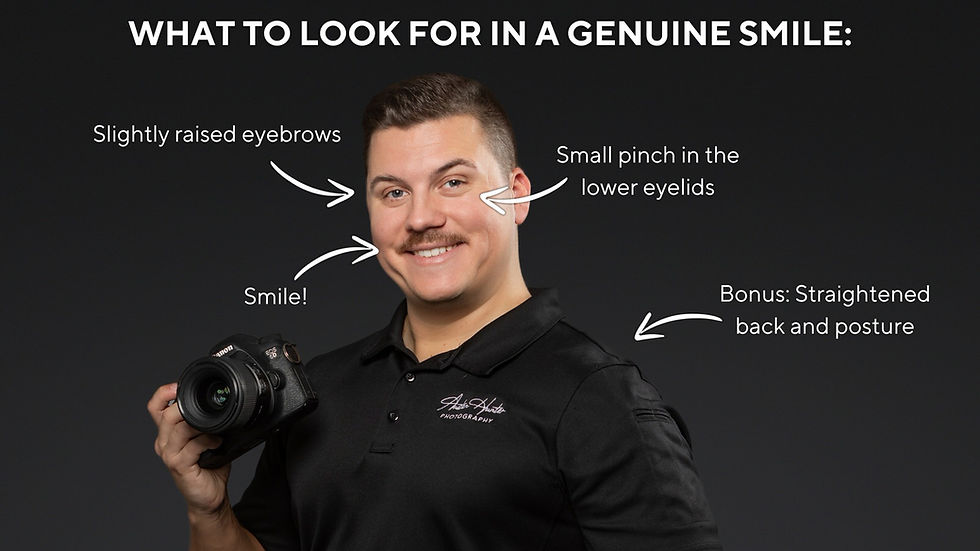
This older illustration shows expression and posture cues. Treat them as possibilities to explore, not a checklist every face has to match.
Compare the Finished Use, Not Just the Biggest Preview

These portraits show how a change in expression changes the feeling of the image. Look at both as a small profile thumbnail as well as a larger portrait.
If the photograph will sit beside colleagues on a website, review it alongside their pictures. Expression can vary while the lighting, crop, and headshot background stay consistent. That usually makes more sense than asking every person to produce an identical smile.

Different people and roles can share a professional presentation without sharing one expression.
Keep the Rest of the Photograph Comfortable
Expression is only part of the picture. Clothes that fit comfortably, clear lighting, and a setting that suits the intended use leave less to worry about. A polished image also does not have to be limited to a tight crop.


The setting and presentation change how a portrait reads too. A smile alone is not what separates a casual snapshot from a planned headshot.
Frequently Asked Questions
Do I Need to Show My Teeth?
No. A closed-mouth smile can be a comfortable, natural choice. Try it alongside a broader smile if you want to compare.
Is a Serious Headshot Unfriendly?
Not necessarily. A neutral expression can feel calm. Tension, lighting, posture, and the context all affect how the photograph reads.
Should Everyone on Our Team Smile?
You can agree on an approachable overall style without forcing an identical expression. Consistent framing and lighting help the team page feel cohesive.
Plan Headshots That Fit Your Team
If you are organizing a Pensacola team session, I can help you settle the look, location, and intended uses before the day. Start with my corporate headshot guide, then send the team details for a custom quote.


